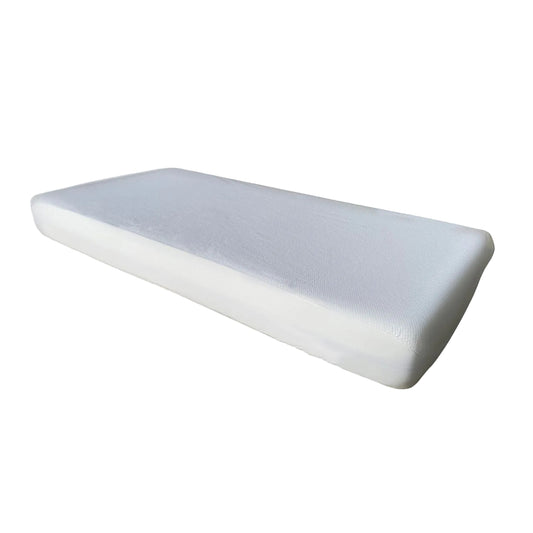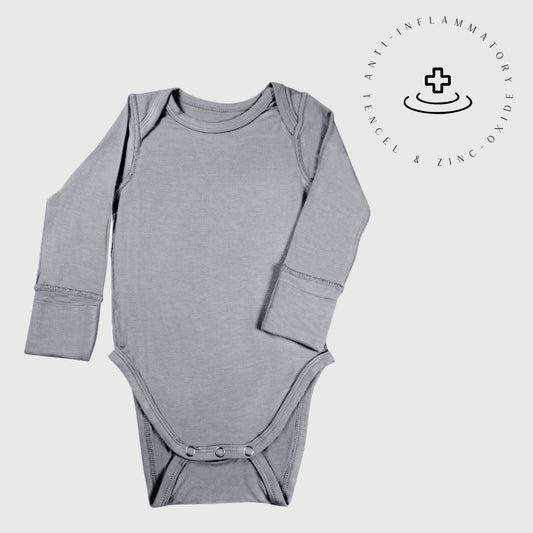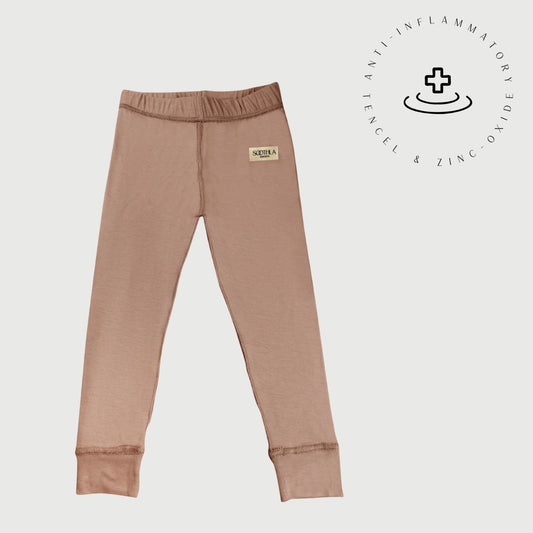

Walk into any baby shop or browse any "eczema clothing" search result, and you'll encounter three fabrics making similar promises: TENCEL lyocell, organic cotton, and bamboo viscose. All three are marketed as soft, gentle, and ideal for sensitive skin. All three cost more than conventional synthetics.
So which one is actually best for a child with eczema?
Here's a direct comparison, including what each fabric genuinely does well, where it falls short, and how to decide which is right for your child and your budget.
Why Fabric Choice Matters
For a child with eczema, fabric is not a minor consideration. It's in contact with skin for 10–12 hours during sleep, and all day during waking hours. The wrong fabric traps heat, holds moisture against the skin, and introduces friction, each of which is a documented eczema trigger. The right fabric removes or reduces those triggers without adding new ones.
Fabric accounts for roughly 60% of nighttime skin comfort. The rest is temperature, humidity, skincare routine, and identifying individual triggers. No fabric alone solves eczema, but the right one removes a daily source of irritation.
Quick Comparison
| Factor | TENCEL (Lyocell) | Organic Cotton | Bamboo Viscose |
|---|---|---|---|
| Softness | Silky, excellent | Natural, good | Silky, good |
| Breathability | Excellent | Good | Good |
| Moisture-wicking | ~70% better than cotton | Baseline | ~60% better than cotton |
| Hypoallergenic | Yes (certified) | Mostly (organic = safer) | Mostly (quality varies) |
| Durability | Very high (100+ washes) | High (50–100 washes) | Moderate (30–50 washes) |
| Eco credentials | Closed-loop, biodegradable | Biodegradable (if organic) | Biodegradable, but chemical-heavy process |
| Cost | Higher | Moderate | Moderate |
| Best for eczema | ⭐⭐⭐⭐⭐ | ⭐⭐⭐⭐ | ⭐⭐⭐ |
TENCEL Lyocell: The Gold Standard
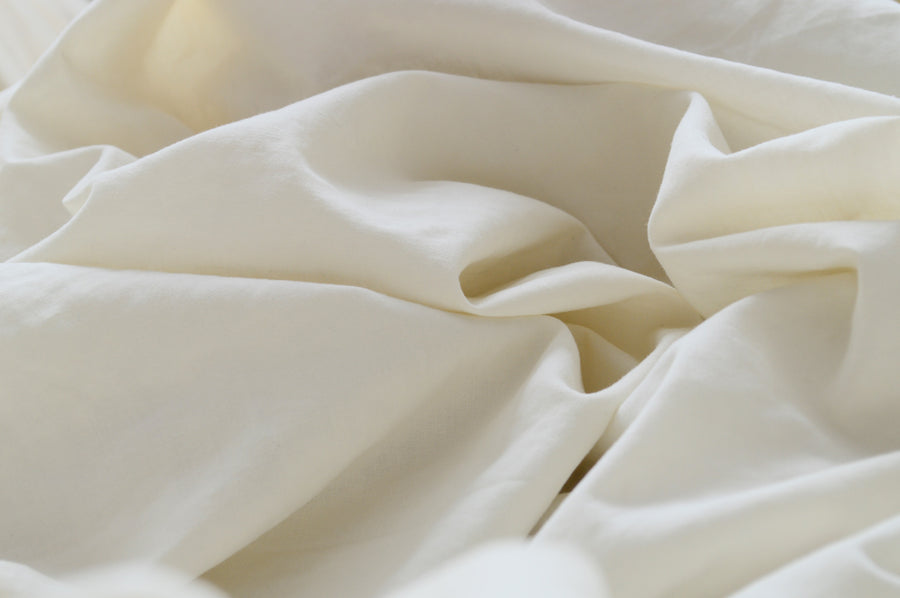
TENCEL is made from eucalyptus wood pulp, produced in a closed-loop manufacturing process that recovers and reuses 99% of the solvents used. It's won the EU Environmental Award. The fibre is fully biodegradable.
Why it outperforms for eczema:
- Moisture-wicking: Absorbs up to 70% more moisture than cotton, sweat is drawn away from skin rather than sitting against it
- Hypoallergenic: No pesticide residues, no harsh chemical processing
- Silky surface: The fibre structure is inherently smooth, less friction against irritated skin
- Temperature regulation: Adjusts to body temperature, reducing heat build-up that triggers flares
- Durability: Maintains its properties through 100+ washes without pilling or degradation
Honest downsides: TENCEL costs more than organic cotton and is less available in mass-market retail.
Soothla's version: We use TENCEL infused with zinc via the Smartcel Sensitive patented process, adding antibacterial properties to TENCEL's already strong baseline. See the zinc fabric science →
"Many other scratch suits and eczema clothing tried, but these outfits are truly of much better quality, and they look beautiful too!"
Organic Cotton: The Solid Runner-Up
Organic cotton is grown without synthetic pesticides and processed without the harsh chemical treatments applied to conventional cotton. It's soft, breathable, and widely available. Look for GOTS (Global Organic Textile Standard) certification.
Why it works for eczema: Breathable, naturally soft, affordable, familiar, biodegradable. OEKO-TEX 100 Class 1 certified options exist.
Where it falls short: Less moisture-wicking than TENCEL (about 60% as absorbent), lower durability (50–100 washes before pilling), and more frequent replacement needed. Always choose certified organic, conventional cotton carries pesticide residue risk.
Best for: Families with tighter budgets, or children with mild to moderate eczema. Organic cotton is genuinely good, just not quite as strong as TENCEL for moisture management.
Bamboo Viscose: The Trendy Middle Ground
Bamboo fabric is almost always made via the viscose process, bamboo plant material is dissolved in chemical solvents to create a fibre. The resulting fabric is soft with reasonable moisture-wicking properties. However:
- The viscose process uses harsher chemicals than TENCEL's closed-loop lyocell process
- Quality and safety certification varies significantly between manufacturers
- Durability is lower, expect pilling after 30–50 washes
- "Bamboo" is not a tightly regulated term, and some brands overstate sustainability claims
When bamboo viscose is a reasonable choice: If TENCEL is not available or genuinely unaffordable, high-quality certified bamboo viscose is better than organic cotton for moisture management. Look for OEKO-TEX 100 certification and transparent production information.
Synthetics and Polyester: Avoid for Eczema
Polyester and synthetic blends trap heat and moisture, can harbour bacteria, generate static electricity, and shed microplastics with washing. There is no scenario in which these are appropriate for a child with eczema-prone skin. The cost saving is not worth it.
The Cost-Per-Wash Reality
A common objection to TENCEL is the price. Here's why that thinking is often mistaken:
TENCEL sheet (example: 800 SEK), lasting 100 washes: 8 SEK per wash
Organic cotton sheet (example: 400 SEK), lasting 75 washes: 5.3 SEK per wash
However, replace cotton every ~18 months = 3 replacements over 4 years = 1,200 SEK total
Over 4 years: TENCEL ≈ 800–1,600 SEK (1–2 sheets) vs. cotton ≈ 1,200 SEK+ (3–4 replacements)
Winner on value: TENCEL, with better performance throughout.
Numbers illustrative, actual costs depend on specific products and washing frequency.
How to Choose: A Decision Guide
Choose TENCEL if:
- Your child has moderate to severe eczema
- Moisture management and durability are priorities
- You care about environmental credentials
- Budget allows for the higher upfront cost
Choose organic cotton if:
- Budget is the primary constraint
- Your child has mild eczema or sensitive skin (not severe)
- You're willing to replace more frequently
Choose bamboo viscose if:
- TENCEL is not accessible or affordable
- You choose certified, high-quality products
- You're aware of the quality variation and select accordingly
FAQ: Fabric Choice Questions
Does fabric really make that much difference?
Fabric is the largest environmental variable you can control for nighttime eczema. Not the only factor, but a significant one, 10–12 hours of daily skin contact adds up.
How do I verify "organic cotton" is genuine?
Look for GOTS certification (Global Organic Textile Standard), it covers both the growing and processing of the fibre. OEKO-TEX 100 is also meaningful.
Can I mix fabrics, bamboo sheets and cotton pyjamas, for example?
Yes. Consistency across the sleep environment is ideal, but mixing is fine. What matters is the quality of each piece individually.
My child seems to react to cotton. Could bamboo work?
A reaction to cotton is usually to chemical residues, not the fibre itself. TENCEL, with no chemical residues from processing, is often better tolerated. Consult a dermatologist to identify the actual trigger.
"Incredible quality and such soft material. My son is usually bothered by labels and rough seams, but this seamless design makes the clothing very comfortable."
Explore Soothla's TENCEL + Zinc Collection
Soothla's clothing and bedding use TENCEL infused with zinc via the Smartcel Sensitive process, the highest-performance option for children with sensitive and eczema-prone skin. OEKO-TEX Standard 100 Class 1 certified. Designed in Sweden, crafted in Portugal.
Shop Bedding Shop Clothing About Our Fabric
This article is for informational purposes only.